All the music posted here is free. If this project helps you, here are easy ways to keep it alive.
Inform your local bowlback player
If you google classical mandolin, most of the time you’re going to start finding folks playing Bach on mandolin. This is often bluegrass players who have been infected with the baroque bug, for which there thankfully exists no cure. But if you're not careful and you fall down that rabbit hole far enough, eventually you’ll start finding actual, legit classical mandolin players. People playing Gervasio, Fouchetti, Denis, and Leone. You’ll also start seeing Calace and Ranieri pop up. And all of these composers had methods. Methods were essentially the Mel Bay books of yesteryear. Or maybe online courses from influencers are a better comparison? I don't know. That's a bigger discussion. ANYWAY.
These instructional manuals were designed to teach people how to play the mandolin. Often explicitly designed for people who do not have a teacher. And when I say “classical mandolin,” I don’t just mean “classical music played on mandolin.” I mean the actual historical tradition of classical mandolin: the techniques, repertoire, picking approaches, extended use of tremolo, and musical aesthetics that developed in Europe during the 1700s, 1800s and early 1900s.
I’ve kind of found that world surprisingly difficult to enter. There are only a few people who teach this stuff, and it’s often online-only instruction. And the players aren’t exactly household names. A lot of the techniques are highly specialized and aren’t commonly discussed in folk music (e.g., Irish, Scottish, bluegrass, etc.) circles. Things like:
Yet unlike many modern instruction books, these old methods helped create the classical mandolin tradition itself. They laid down foundational repertoire using the techniques that they describe and in often cases invented themselves … It's kind of wild if you realize the person who wrote the foundational repertoire also wrote a small book on how to play it. These methods seem to have had an outsized impact on the overall community. I guess just like with technology, whoever gets there first makes a big splash. Some of these classical techniques overlap with other traditions, of course, and they often feel super weird when you first run into them/us. It’s quite easy to learn these techniques incorrectly. In fact I’m still re-learning my glide stroke without popping my hand out and in. No idea why I did that.
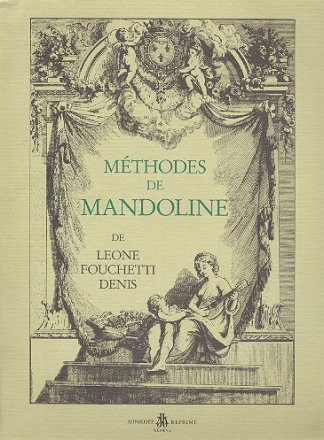
But we have a few challenges with these documents. While other people obviously have copies, and they are referenced all the time... it's hard to find a copy. The methods have been floating around for decades in scans, archives, and collector circles...I only know of Trekel selling hard copies of crazy old classical mandolin music. I'm told that shipping to the USA is a little wonky right now and portions of Trekel are still in German, which... i get it. It's a German site. No shade. Anyway, I often get single pages from a method here and there from something that has made its way online. Thankfully some of these methods are on IMSLP, but not all of them.
Another challenge is that many of these methods are in French, Italian, or German. I screwed up and studied Spanish. And even when you do translate them, the wording can still feel confusing because the musical vocabulary and teaching assumptions are from another era. Literally almost 300 years ago. You run into phrases and concepts that modern musicians simply don’t use anymore unless they already have a background in music history. Here's an example, a lot of North American instrumentalists just don't use solfège so portions written like that will be confusing to them.
Because of these challenges, I started assembling a team. I found a killer young composer and musicologist based out of Paris named Raphaël Hinojosa, who has been helping me locate original copies of these documents. He's also helping to translate them. I'm working with mandolinist, composer, and string-maker Daniel H. Doce, who has been gracious enough to offer his knowledge of the mandolin. There's a few others too, not sure if they want to be called out or not! Anyway, we’re working to translate the text to English and also transcribe the handwritten music to modern notation. I basically paid someone to go to the library. But it was a very specific library, lol. What am I doing with my life?
That immediately raises a huge question, what’s the right way to present these methods to modern players? Do we support intermediate players who already have the techniques down but want to go deeper? Or maybe laser-focus on newcomers to classical mandolin? What about advanced players? I'm thinking we'll need a shotgun approach to do right by everyone. One approach might be:Hopefully this will ensure we are preserving the original documents, and making them available to all, but also making them genuinely useful to modern mandolin players. That’s my current solution anyway but I'm happy to be told otherwise. I plan to post drafts as we go. You can see me trying this and failing with the 24 Gabriele Leone Allemandes on Mandolin Cafe. Since I couldn't read the original French, I wasn't sure about what to do with things like pick direction. It really showed me I had more homework to do. But I’m trying to do this right by playing the music, studying with a teacher, and listening to the greats.
To be clear: I’m not a musicologist. I have no idea what I'm doing. I’m absolutely going to mess some of this up. But I personally believe a few poorly transcribed notes here and there or a rough translation in spots is worth the benefit of making these cultural treasures more widely available. If you don’t nurture a community, it disappears. A big part of this project is simply wanting more people to discover classical mandolin. Give us even a moderate fraction of the classical guitar community and I’d be thrilled. The community has already been incredibly helpful, and I’d love for this to become a collaborative effort over time. If we think a paragraph was poorly translated, or find a bad note, we can simply fix it. All the PDFs and MusicXML files will be available. You can make your own versions too, totally cool. You won’t have to wait for me to come back to this project to fix it. Personally, I can’t wait to slap a giant public domain sticker on everything here.

If you know of additional mandolin methods, historical documents, or rare editions that should be included, please let me know. I’m especially interested in lesser-known regional methods, manuscript sources, and early pedagogical material. Here are the mandolin methods I'm tracking at the moment:
As usual, everything will be freely available. In the words of Fouchetti..."I hope that my work may be useful to lovers of the mandolin."" You'll see something soon :)
If I get a source wrong, use the wrong image, or miss an important detail, I can fix it here and credit the people who helped improve it.
Spot something off? Send it my way and I’ll take a look, update the page when needed, and gladly credit you.